

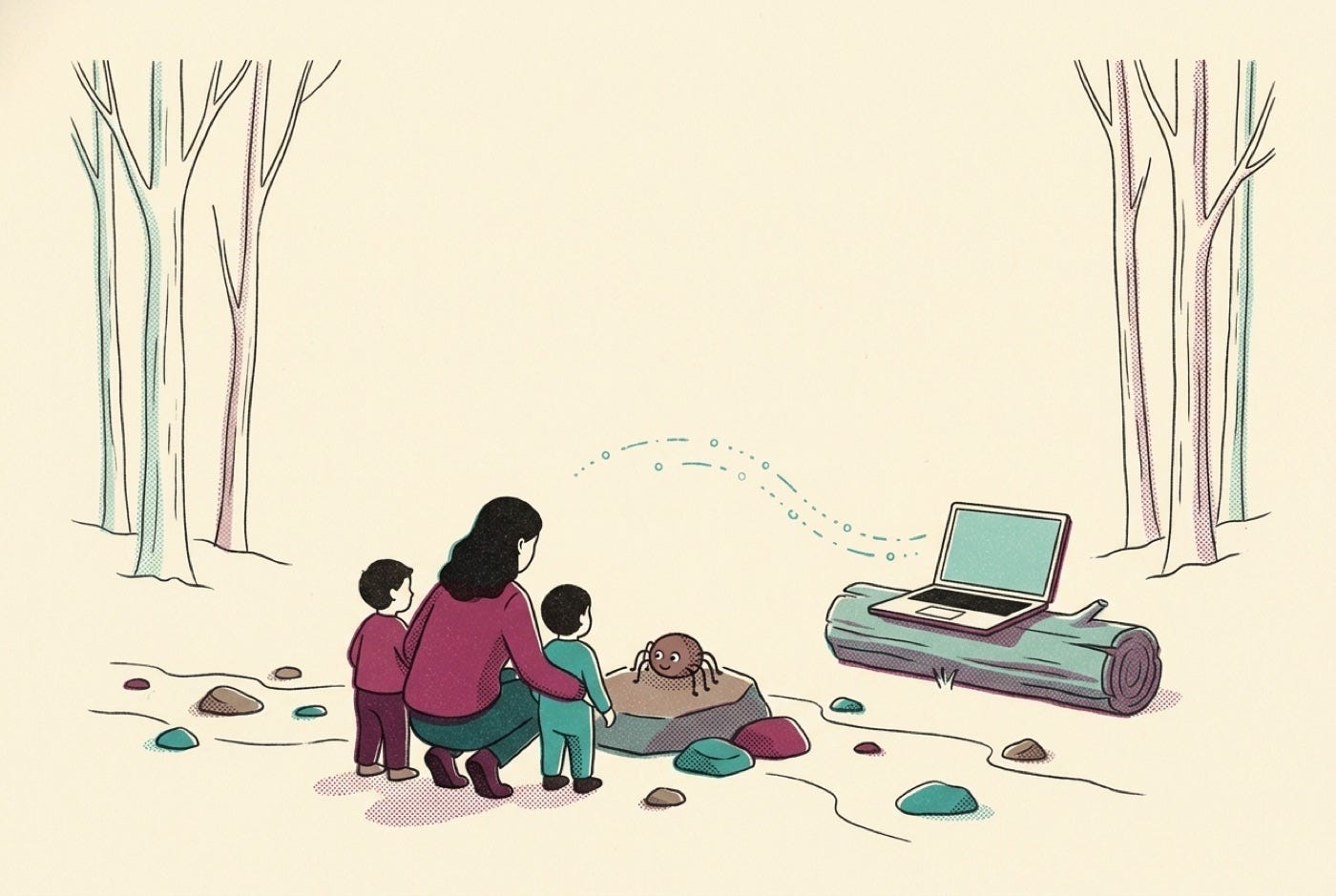
Two weeks ago, my son Finn had show and tell at school. He’d caught a spider a few days before and was keeping it in a glass jar in his room, and wanted to show it to his class. That morning he came downstairs holding the jar up so I could see that the spider had laid eggs. He wanted to build her a home.
As parents, we try to encourage our kids to go deep into the things they love and to find ways to explore the world around them. I will often ask AI to help me think of things to do or interesting facts I can share, but this time, I wanted to build something that could make this into an experience that we could share to really learn about spiders in Portugal.
I had an idea of using AI to build a tool that could teach Finn about spiders through stories, with him as the main character, that evolved over time based on what we were actually doing. I wanted AI to help research real-life activities we could do together (and give me a shopping list of things to buy if needed). And I wanted AI to help suggest real activities based on places to go or events taking place. I wasn’t sure what it would look like, but I wanted to see if I could build an immersive experience, driven by Finn, that would allow us to connect, play, and learn together.
Asking Claude to think expansively
I opened Claude and asked my favorite question: “Help me think expansively about this.” I used Whispr Flow to talk to Claude for well over five minutes, explaining Finn’s interest, the spider with her egg sac, and roughly what I was envisioning.
After a lot of back and forth, I worked with Claude to define the idea of Finn’s Explorer Club. It’s an interactive world built around whatever topic Finn is interested in at the time. There are physical things we buy for the topic, things Finn goes looking for on scavenger hunts, an ongoing and evolving bedtime story about the topic that stars him and his sister, with real adventures for us to go on during the weekends.
How the Explorer Club works
From there, I’ve been building out the system. I started with a long interview so that the AI knew what Finn loves, how he talks and what scares him (in order to ensure this is not included in any story).
I worked with Claude to create cartoon versions of Finn and his younger sister Nora. I also explained what our house looks like, down to the peach walls and the little purple chairs at the kids’ table, so the pictures would feel like home to them. It knows we live in the Algarve, so every activity is something we can do around here, and the spiders we learn about are local to our area.
We mocked up the first season as a five-week unit:
1️⃣ Learning about spiders
2️⃣ Building a real spider house
3️⃣ Finding a spider
4️⃣ Caring for her for a few weeks
5️⃣ Letting her go
The intake with Finn
Before the first story, Finn and I sat on the sofa for what I called his intake. He described his guide for the club: a funny black chameleon with purple hair, a Portugal flag tucked into it and a walking stick, whom he named Cami. He listened to a handful of voices and picked the one Cami would have. Then he drew his own badge for the club and gave it a name, which is how we came to be members of the Big Fat Club.
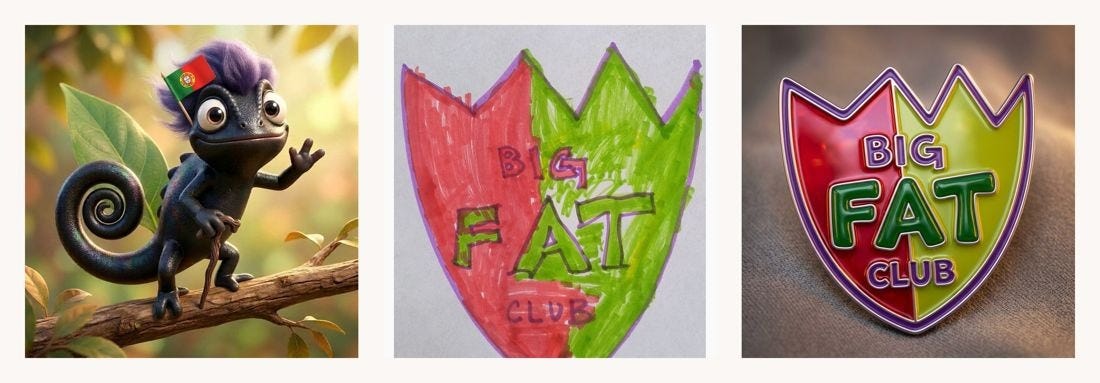
Not everything worked perfectly. For almost everything, I went through multiple revisions and explained what details were missing. I did this simply by talking to Claude.
The stories
Once the intake was done, I asked Claude to start putting together the stories and everything around them, with my input at every step.
For each topic, Claude researches what we’ll need and splits it into things to buy (a terrarium and a moss brick) and things we can go and find ourselves (bark and sticks from the forest, for example). For the things to buy, it gives me links to shops that actually deliver to us in Portugal.
Our first order included everything for a spider house. The early stories were built around this, as it happened in real life: the parcel arriving, Finn holding up a coconut brick, and Cami getting sprayed with the spray bottle and turning the colour of a raincloud.
Every story also includes my two-year old daughter, who has a role to play in everything we do. She carries a small yellow tub of dried mango everywhere and calls it her jackpot, so in one story the jackpot came along to look for spiders too (Cami tried a piece of mango and chewed it for a very long time).
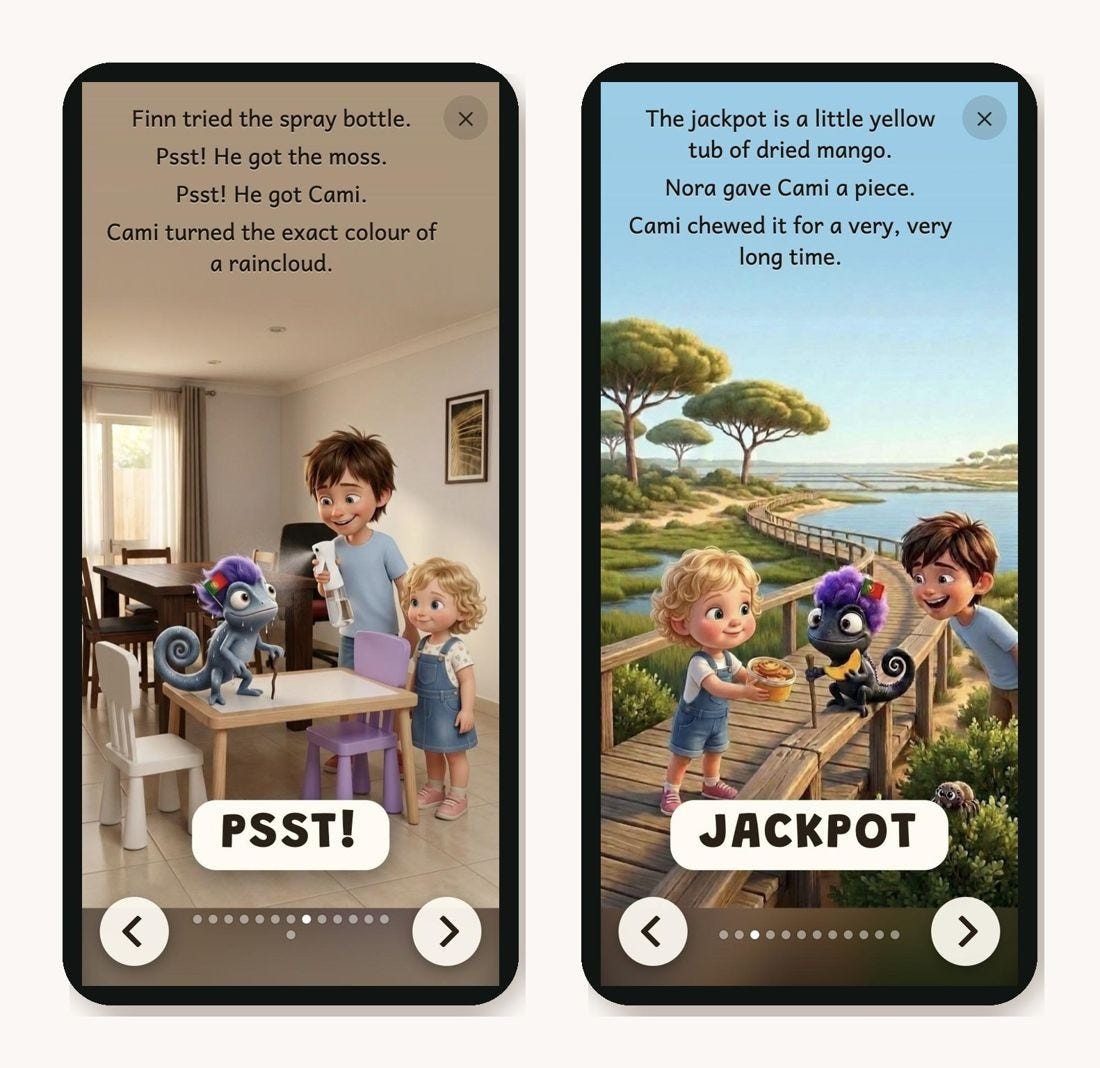
Each week there are three evening stories starring Finn and Nora, each one built on real things we’re actually doing. Some pages have a YouTube video embedded in them to learn about spiders, which I have watched and approved first.
Each story also has a real fact with a real, credited photo. In each story, Cami says a line out loud with a short animation which is always a lot of fun for the kids.
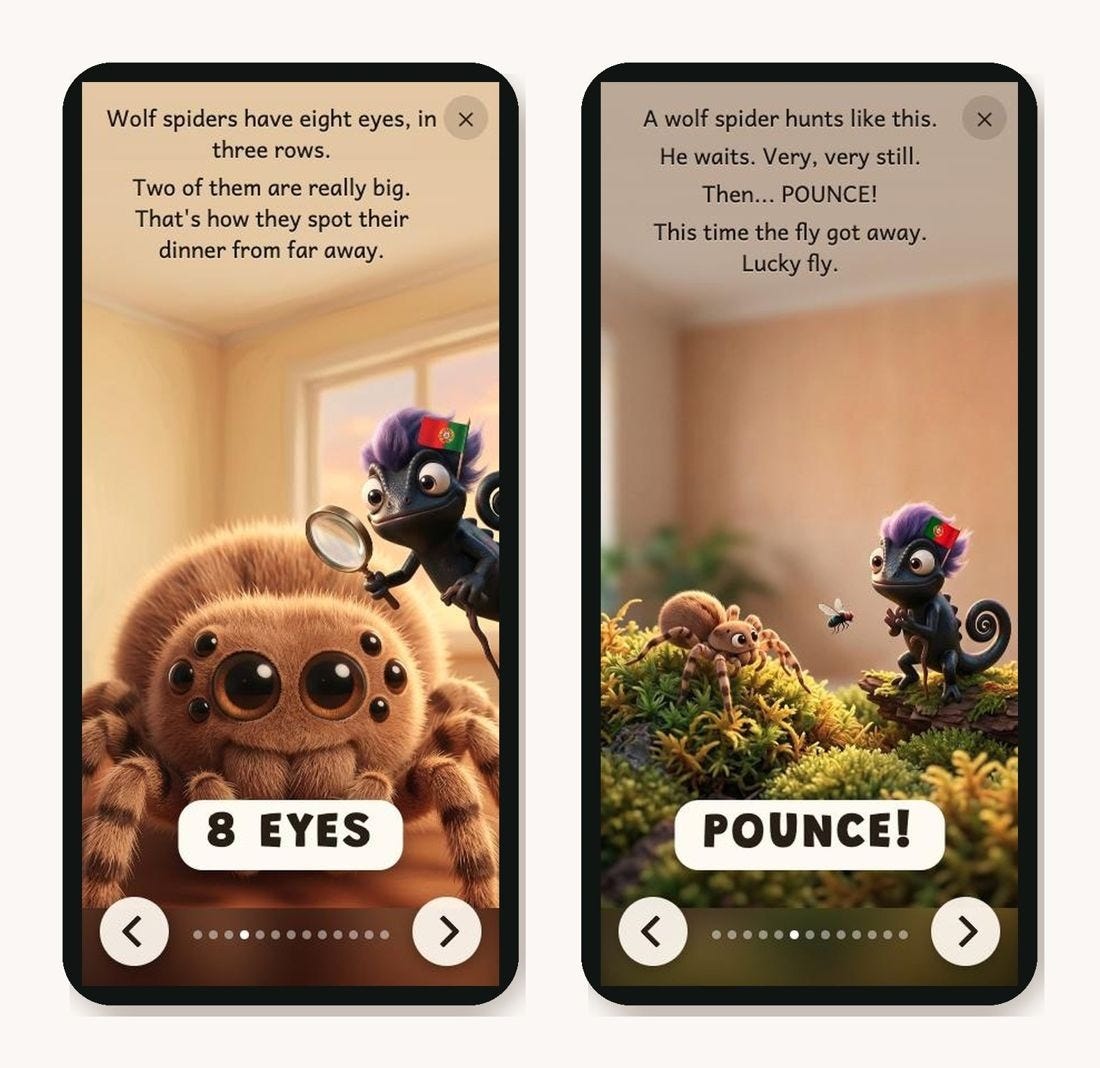
I’ve also built in other learning that Finn doesn’t realize he’s doing. Some story pages have one big word at the bottom for him to read on his own (BRICK, JACKPOT, 8 EYES and POUNCE!).
The field notes give him things to count, like the eight legs on a spider versus the six on an insect, the nature bingo keeps a tally of how many things he’s found, and paint by number has him matching numbers to colours.
Every picture is drawn by AI, which sometimes gets things wrong, so it goes through multiple rounds of review. A separate AI agent now checks every page before I see it.
Finn never talks to the AI himself, since everything goes through me, and nothing reaches him until I’ve read and approved it. The app itself is private and password-protected.
Everything around the stories
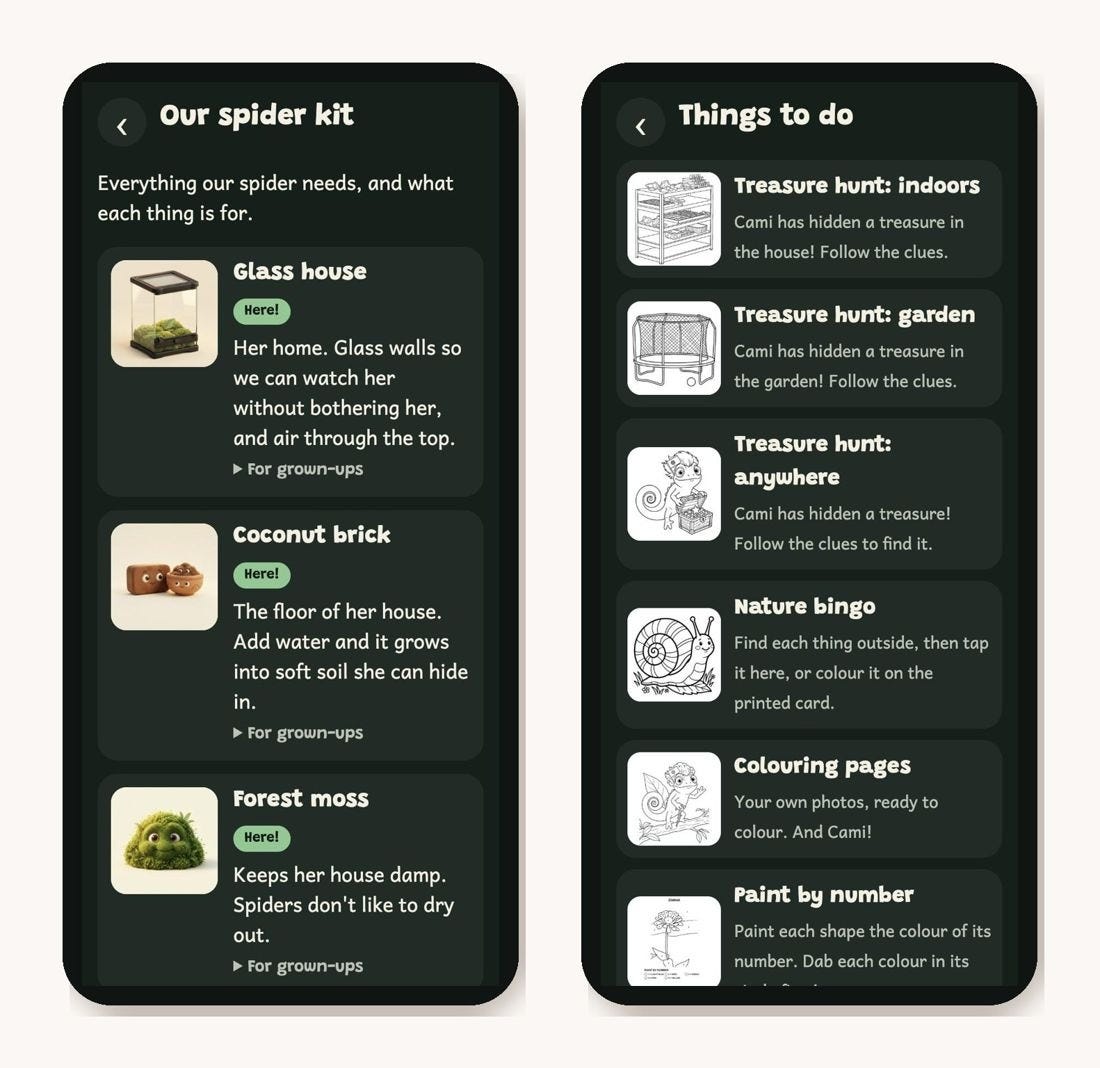
Claude also searches for places we can go and events, like workshops at the science museum in Faro, exhibitions and local festivals that connect to what we’re learning about. There is also an activity guide I can open whenever I’m looking for something to do with the kids, including colouring pages made from photos Finn has actually taken, paint by number pages, treasure hunts around our own house and garden, and other arts and crafts activities based on the unit theme.
Finding Chris Webb
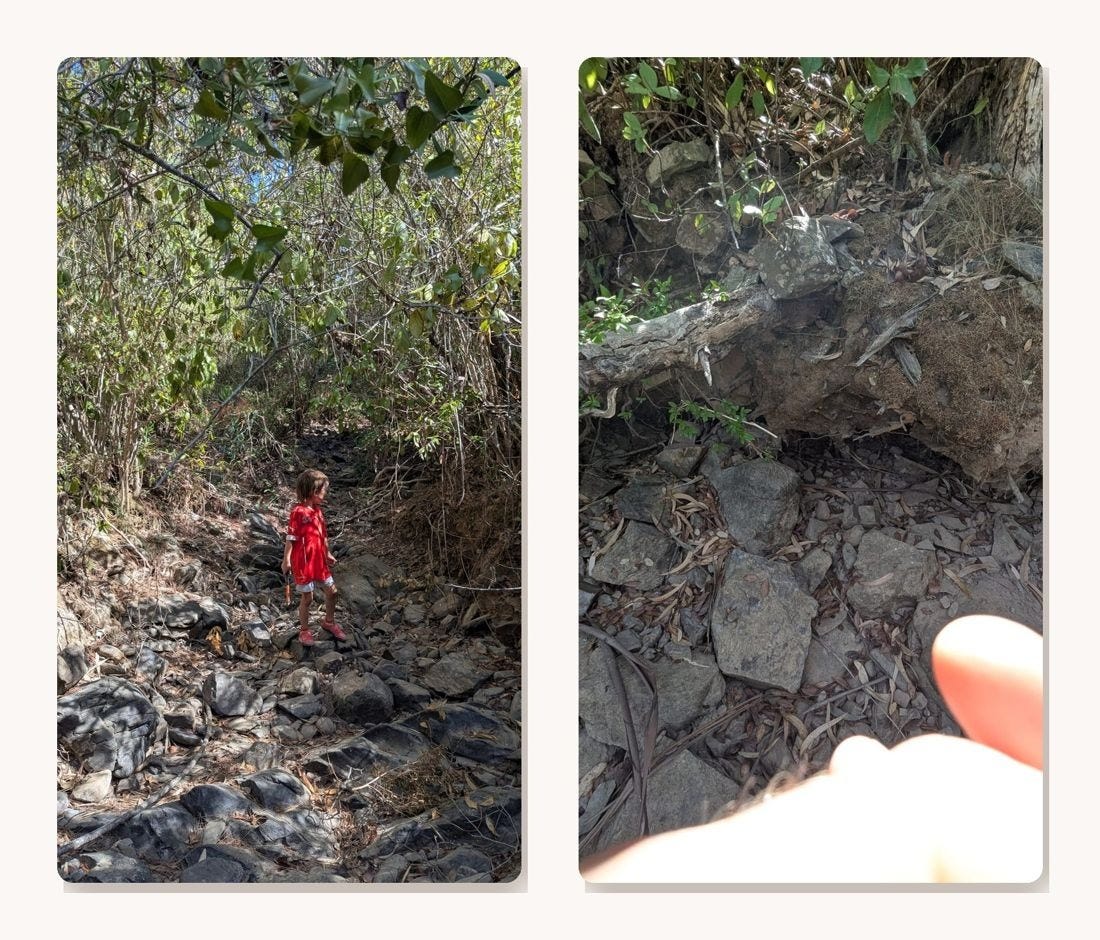
By the time we got around to building the spider house, the original spider that inspired this whole initiative had been let go along with her eggs. So we had to find a new one. Last weekend, we went spider hunting in a forest near us. We spent the entire day outside looking under rocks, finding bugs and even a giant snake skin. Finn found our spider under a rock in a dried-out riverbed. He and his dad caught him in a jar. Finn named him Chris Webb (though, ironically, we later found out that a Wolf Spider doesn’t actually spin a web!).
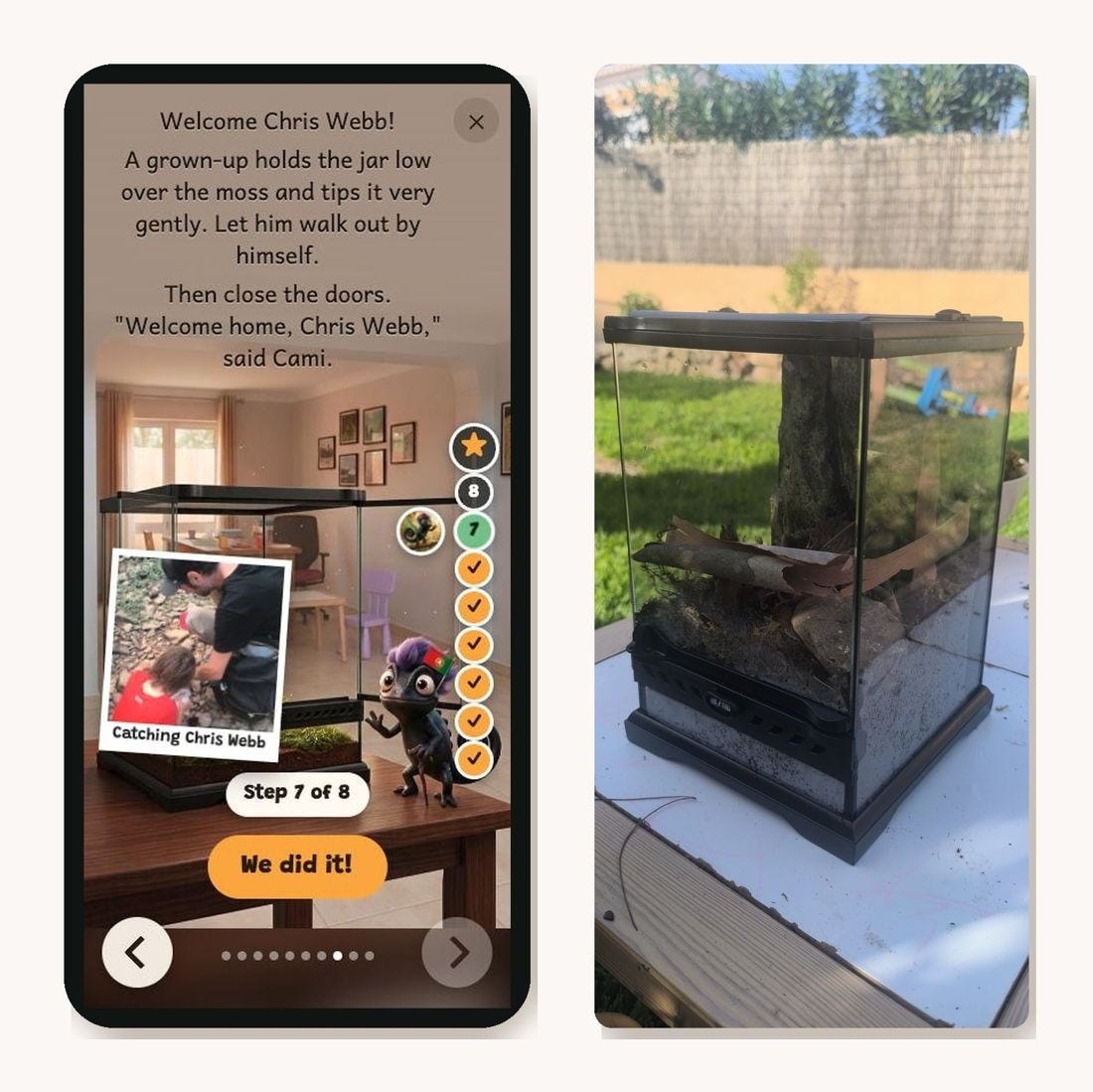
We went home and built his house the same afternoon, following the step-by-step guide in the app so we knew what to do. The kids soaked the coconut brick until it grew into soft soil, pressed the moss down on top (Nora’s job), added the bark and sticks we’d found in the forest, and gave it a spray with the spray bottle. Every time Finn ticked off a step, Cami climbed one rung higher up the side of the page until he reached the star at the top.
That afternoon I added Chris Webb and our photos from the day into the guide, including a new step for welcoming him into his new home, and Claude used those images and my description of the day to create the story we read that evening.
Since then, we’ve read a whole story about wolf spiders, which is our best guess at what Chris Webb is. We learned what wolf spiders are, where they live (on every continent except Antarctica), what they eat and how to look after him. There were a few fun facts too, like the eight eyes they use to spot their dinner from far away and the way a wolf spider mom carries her babies around on her back.
Since then, we’ve identified at least five other spider species around our house. And our evening stories weave in these little moments from our day to make them more magical and engaging.
Finn asks for it every day
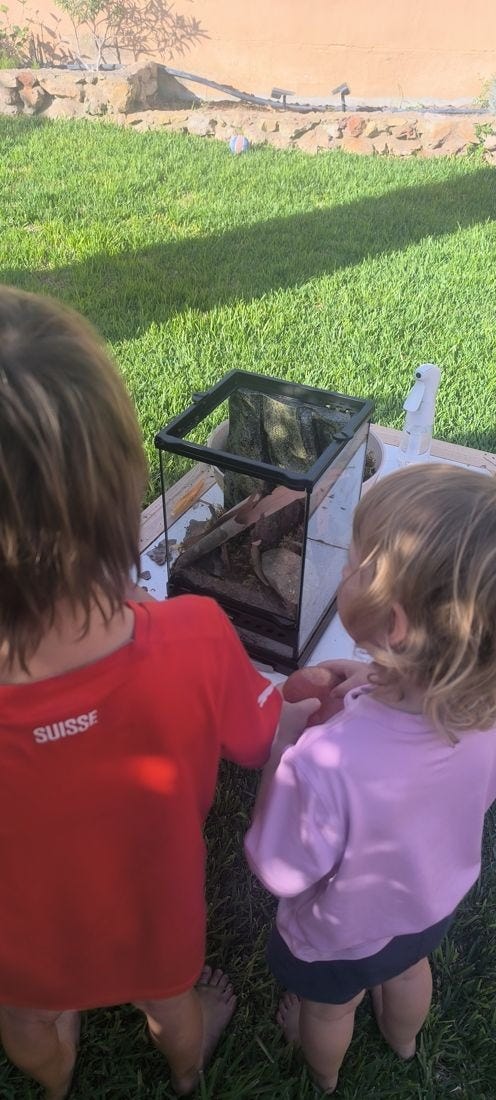
The Explorer Club has become something Finn asks for every single day. He loves seeing himself in the stories. Being able to go and physically do the things that happened in them has made it even more immersive and engaging than I’d hoped. It has also given our family something to really bond over.
Our biggest limitation is our imagination
I built most of this over a weekend and a few evenings, almost all of it from my phone using Claude Code’s Remote Control while I was away from my laptop, simply by giving ideas and iterating on them. It really does feel like our biggest limitation now is our own creativity and imagination. I’ve heard this sentiment repeated on multiple podcasts I listen to: by Greg Isenberg, Allie K. Miller, and Greg Brockman.
Earlier this month I wrote about whether AI feels more like an industrial revolution or a renaissance. The Explorer Club is the clearest example I have of the renaissance side. I’m not an illustrator, a primary school teacher or an app developer. A few years ago, an idea like this would have been something I’d think about and then let go. But now, I’m able to both dream up the idea, build it, and continue to iterate on it to adapt it to exactly what I want, and what Finn is interested in.
When the spider season ends, we’ll dig into whatever Finn is interested in next. His list already includes bee-eaters, chameleons, butterflies and flamingos. We’ll keep using this as a way to connect, learn and be inspired together.
There’s so much potential to use AI to think broadly about the things that matter to us, and to create more human connection. Too often, we hear of the negative aspects of AI: how it reduces human interaction; how it limits our critical thinking; and leads to generic, hollow outputs. While these concerns are real, there are so many ways to leverage AI to expand what is possible, to think more critically, and to hyper-personalize products to inspire and engage.